Posts

Producing Beta Copies

Image
Wei ghing the Options At first it seemed extravagant to me to print beta copies of my novel in mass market paperback format.  In fact, though, it was one of the most economical and practical options. Most of my beta readers stated a preference for a hard copy version of the ms. The cheapest way to do that would have been to print it on my home printer, but the manuscript is over 100 double-sided pages and I need a minimum of 12 copies. 1200 pages is the capacity of a standard printer cartridge at 60 dollars. And when the wear and tear on the printer is added in – it’s quite a job for a home printer. There are plenty of additional costs. I don’t own a spiral binding machine and they start at $170. The plastic binders themselves would add another $20. And the cost of shipping would be considerably more than shipping a 6 by 9 inch book. The DIY method might have been cheaper if I invested 10 or 12 hours shopping around. But if I calculate the labour at our provincial minimum ...
Getting a Handle on Twitter

Maybe it’s because I’m an antisocial writer-type (although some writers seem to be naturals on Twitter), but I have had trouble from the beginning getting traction on the network. I finally posted about it to #WriterCommunity, expressing my frustration about doing everything right (as far as I could tell) but still failing to generate much feedback or engagement. A few others responded to my plaintive post by suggesting that engaging with other peoples’ posts was probably the best way to get the kind of feedback I was after. I had just been experiencing that very phenomenon, so (for once) understood exactly what they were saying. And they’re right. Up until days ago, I had been approaching Twitter as a writer/aspiring guru for younger writers – expecting an audience and getting disappointed when that audience didn’t materialize. But in fact, the answer was in front of me the whole time – embedded in the hashtag for crying out loud! #WritersCommunity. Engagement ...

Nathan Ballingrud Double Feature Book Review

Image
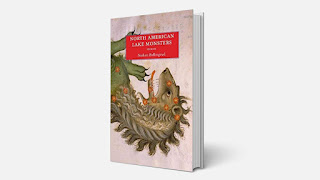
After reading the short story “Atlas of Hell,” in Ellen Datlow's  Fearful Symmetries,  anthology, I looked up Nathan Ballingrud on Facebook and told him how much I loved the story. He seemed pleased that I had responded positively to what he described as a real change of direction. I mentioned the story to several friends, one of whom told me, “You think that story was good, you should read his collection, North American Lake Monsters .”  I’ve been writing and reading horror since I was a teenager, and that book was unlike anything I’d read before.   Lots of people have pointed out over the years that horror is the only genre named after an emotional reaction. The stories in North American Lake Monsters are actually less about the monsters than they are about that emotional response. They aren’t just horror stories, they’re stories about horror –   the emotional fallout that monsters leave in their wake. It is riveting and devastating and merciless. It ...

Review of Curious Toys by Elizabeth Hand

Image
From the decadent, dystopian science fiction of her debut novel, Winterlong ; to the immersive magic of her art world fantasies like Mortal Love ; to the harsh, earthy, crystalline landscapes of her Cass Neary suspense novels; Elizabeth Hand’s ouevre is as dark, sensuous and edgy as anything out there. I keep a copy of Hand’s short story collection, Errantry , beside my desk to give me something to aim for with my own fiction. It’s a bar so high that not many writers reach it more than a few times in their lifetimes, but Elizabeth Hand has pretty much resided there throughout her 20+ book career-to-date. So when I received an advance reading copy of her upcoming book, Curious Toys through a Goodreads draw, I was over the moon. After reading it obsessively over the next few days, and raving about it to friends, family and co-workers, I have finished it, thought about it, and am ready to declare it one of her best. In this convincing evocation of early 20th century Chicago, 1...

Writing Lessons from Other Disciplines

Image
Noticing details, working with natural colour changes and adding textures can give the sculptor a much wider palette to work with. In addition to writing, my other creative outlet is stone sculpture. The two may not seem to have much in common, but sculpting has taught me a great deal about writing. 1) Patience. If you rush a sculpture, all sorts of bad things can happen. The most obvious and common one is splitting the stone unexpectedly. When you are handcarving stone, you start with big tools, sharp hammers and chisels that can sheer away unwanted stone and help you start shaping your sculpture. Rushing this step can be a big mistake. With the amount of stone dust you raise, it can be hard to see cracks forming - and the sheer impact of each hammer blow can encourage any pre-existing hairline cracks to split wide open. I've had more than one sculpture simply sheer in half right when I was starting to get excited about what it was going to become.  If you take ...

SO Last Millennium

This post Includes Game of Thrones Final Season Spoilers After reading the A Song of Fire and Ice books, I started following Game of Thrones. Been watch faithfully since Season One Episode One. Subscribed to HBO for ten years to get where we are now.  The last few episodes have rendered the entire exercise a colossal waste of time, money, and talent.  Game of Thrones  has become instantly outdated and irrelevant. The show runners can talk all they want about having planted the seeds of what the Mother of Dragons would become from the beginning, but the point is, Daenerys, as played by Emilia Clarke, evolved and the writers didn’t.   The world we live in evolved and the issues we care about changed dramatically over the past 25 years. But the show runners chose not to adapt along with it. They made no attempt to weave our moral awakening into the storyline, instead, choosing to be blind to the forces and deaf to the voices that have blossomed in our soci...

Breaking Writers Blocks

Image
Not all writer’s blocks are equal. Sometimes they are all inclusive – dictating that your mind will shut down as soon as you try to write anything. This is the famous blank page syndrome of classic writer’s block. Some stop you from writing altogether while others thrive on misdirection – allowing you to write, but sending you down the wrong paths (more like labyrinths than huge walls or electric fences). There are more writer’s blocks than there are writers and everyone you face is likely to be different. So there cannot be one cure for writers block. For me, writer’s blocks are more likely to be project specific – they come as a direct result of having worked myself into a corner. It’s almost impossible to get enough distance to see what I have done to create the problem for myself. And problems you can’t perceive can be very hard to solve. When that happens, you need to find workarounds to get yourself going again. During my fourth draft of my Work In Progress, I...